
Petrol, LPG Price Increases Deepen Cost-of-Living Pressure on Nigerians
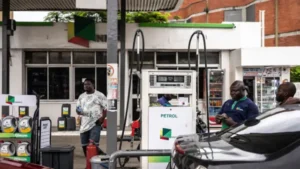
Nigerian households are facing another increase in everyday expenses as the price of cooking gas rises in parts of the country, coming shortly after higher petrol prices pushed up transportation costs.
In Lagos, the retail price of Liquefied Petroleum Gas (LPG), commonly known as cooking gas, has climbed to about ₦1,600 per kilogramme, while consumers in some other South-West states are paying between ₦1,300 and ₦1,500 per kilogramme.
The increase means families using a standard 12.5kg cylinder could now spend roughly ₦20,000 on a refill in Lagos and about ₦18,750 in Osun at the reported retail prices.
Different prices across the supply chain
Checks across Lagos, Osun, Oyo and Ogun showed significant differences between what LPG costs at plants and what consumers eventually pay at retail outlets.
Reported plant prices stood at approximately ₦1,350 per kilogramme in Lagos, ₦1,300 in Osun, ₦1,200 in Oyo and ₦1,400 in Ogun.
Retail prices were higher, with Lagos recording about ₦1,600 per kilogramme, Osun ₦1,500 and Oyo around ₦1,300.
Industry operators said transportation, distributor margins and the distance between consumers and supply points can contribute substantially to the final price.
LPG operators caution against generalising the increase
Not all industry players agree that there has been a uniform surge across the LPG market.
Olatunbosun Oladapo, Managing Director of DAPNIK Gas Plant, said his facility in Ibadan was selling LPG at around ₦1,150 per kilogramme.
He also suggested that some outlets in Lagos could offer prices within the ₦1,100–₦1,150 range, depending on their supply and distribution arrangements.
According to him, transportation expenses and other operating costs incurred between the plant and the final consumer can significantly increase retail prices.
Supply shortage remains a concern
Energy lawyer and oil and gas expert Dr Ayodele Oni offered another explanation for the price pressure, pointing to the interaction between supply, international LPG prices, foreign exchange and domestic logistics.
He argued that increasing domestic production does not necessarily guarantee lower consumer prices when other parts of the pricing chain remain exposed to external market conditions.
Data from the Nigerian Midstream and Downstream Petroleum Regulatory Authority cited in the report showed that Nigeria supplied approximately 565,106 tonnes of LPG between January and June 18, 2026, compared with an estimated requirement of 657,072 tonnes.
That represented a supply gap of about 91,966 tonnes, with domestic supply meeting roughly 86 percent of estimated demand during the period.
Global energy conditions also affect local prices
Nigeria’s LPG market has also experienced disruptions linked to international energy-market developments.
According to Argus data cited in the report, LPG demand dropped to about 123,000 tonnes in June, while imports increased sharply as domestic production and import conditions were affected.
Industry participants have identified international LPG prices, shipping and insurance costs, foreign exchange movements, transportation and product availability as factors that can influence prices paid by consumers.
Higher energy costs could affect food prices
The increase in cooking gas prices is not limited to household budgets.
Restaurants, food vendors and other small businesses that rely on LPG may also face higher operating costs. If the increase persists, some businesses could pass part of the additional expense to customers through higher prices for prepared meals and other services.
There are also concerns about the impact on Nigeria’s transition toward cleaner cooking fuels.
Sustained increases in LPG prices could make it more difficult for lower-income households to continue using cooking gas, potentially encouraging some families to return to charcoal, firewood or kerosene.
Cost-of-living pressures continue
The latest LPG increase comes amid broader concerns about the cost of living.
Higher petrol prices have already contributed to increased transportation expenses, while food and other household costs remain a major concern for many Nigerians.
Former Vice President Atiku Abubakar linked rising food, transport and energy expenses to Nigeria’s child malnutrition challenge, citing figures showing significant levels of stunting among children under five. His comments were presented as part of a broader argument about the effect of economic pressures on vulnerable households.
Calls for better infrastructure and pricing transparency
Industry stakeholders say addressing Nigeria’s LPG challenge will require more than increasing domestic production.
They have called for stronger storage and distribution infrastructure, greater transparency in depot and retail pricing, improved domestic supply arrangements and more efficient logistics.
The immediate challenge for consumers is the growing cost of meeting basic household needs. For policymakers, the longer-term challenge is ensuring that Nigeria’s expanding domestic energy supply translates into affordable prices for ordinary consumers.
For many families, the question is increasingly not simply whether cooking gas is available, but whether they can still afford to use it regularly.
About The Author