

Nigeria Commences £746m Apapa, Tin Can Port Modernisation to Cut Trade Costs, Create 20,000 Jobs
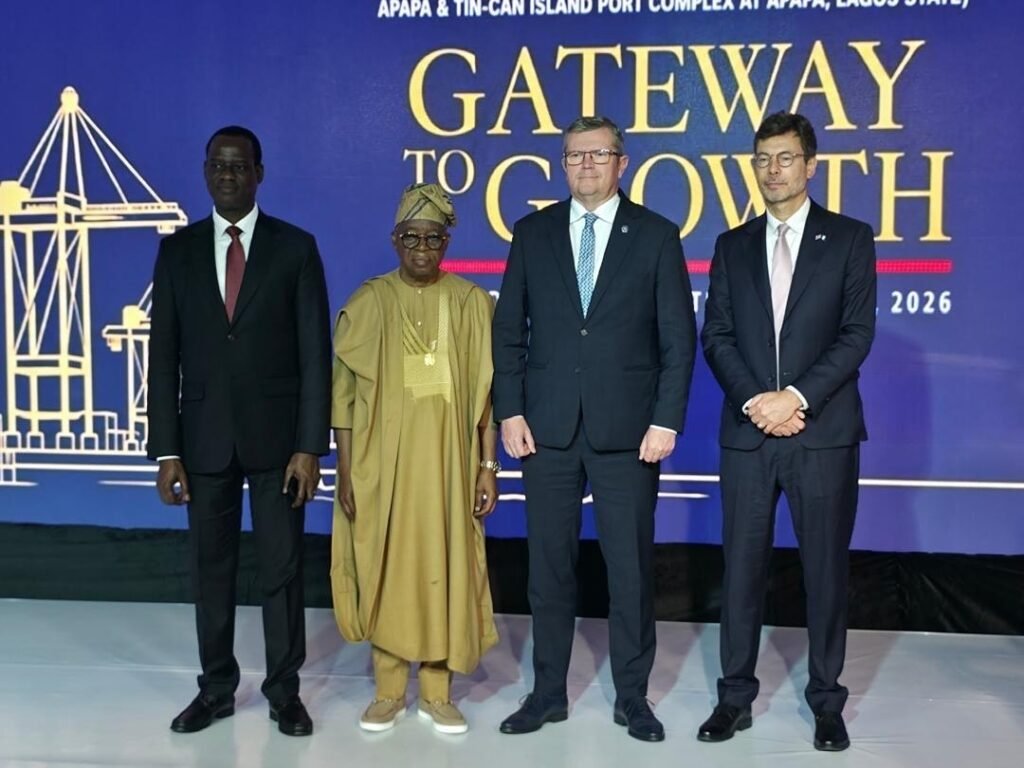
Nigeria has officially commenced a £746 million rehabilitation programme for the Apapa and Tin Can Island ports in Lagos, in a major effort to modernise the country’s maritime infrastructure, improve cargo movement and reduce the cost of international trade.
The project, which is expected to ease longstanding operational challenges at the two major seaports, is being financed through a UK Export Finance (UKEF) Buyer Credit Facility, with Citi coordinating the financial arrangement.
The groundbreaking ceremony, held on Wednesday, November 25, 2026, signals the beginning of the rehabilitation programme, which is expected to improve efficiency for importers, exporters and other businesses that depend on the ports.
The proposed works will cover several critical facilities, including quay walls and berths, dredging and navigation channels, port access infrastructure, cargo-handling equipment and operational systems.
Minister of Marine and Blue Economy, Adegboyega Oyetola, said the modernisation would introduce more efficient and digitally driven port operations while generating at least 20,000 direct and indirect employment opportunities.
The expected jobs will span construction, engineering, dredging, logistics, transportation, port operations and other related industries.
Finance Minister and Coordinating Minister of the Economy, Taiwo Oyedele, described the initiative as an important intervention that would help reduce the cost of doing business in Nigeria.
He explained that improving port operations would minimise cargo delays and related expenses while making Nigerian products more competitive in domestic and international markets.
Nigerian and British Companies to Execute Project
The construction phase will be undertaken by Hitech Nigeria and ITB Nigeria, while specialised equipment, materials and technical services will be provided by British companies, including British Steel.
British Deputy High Commissioner in Lagos, Jonny Baxter, described the initiative as a practical demonstration of the growing economic relationship between Nigeria and the United Kingdom.
He disclosed that British businesses would secure contracts worth at least £236 million under the project, creating commercial opportunities for companies in the United Kingdom.
Citi Highlights Economic Benefits of Port Rehabilitation
Managing Director and Chief Executive Officer of Citi Nigeria, Nneka Enwereji, said the investment represented an important opportunity to improve Nigeria’s trade infrastructure and strengthen its economic connections.
She noted that more efficient port operations would support trade activities, improve connectivity and contribute to the country’s long-term economic development.
The rehabilitation of Apapa and Tin Can Island ports is expected to address infrastructure deficiencies that have historically affected cargo handling and increased logistics expenses.
With construction expected to proceed following the groundbreaking ceremony, the Federal Government is looking to reposition the two ports as more efficient gateways for Nigeria’s international trade.
About The Author