
Nigeria’s Economic Reforms Show Progress, but Budget Delivery Remains a Major Concern

Nigeria’s economic reform programme is beginning to show signs of progress, with stronger economic growth, increased capital inflows and improvements in government revenue. However, concerns over weak budget implementation and the slow translation of economic policies into better living conditions remain.
At the centre of these efforts is the Minister of Budget and Economic Planning, Abubakar Bagudu, who has played a significant role in shaping the Federal Government’s economic strategy since joining the administration in 2023.
His tenure has coincided with some of the most significant economic policy changes in recent years, including the removal of petrol subsidies, foreign exchange reforms, new development plans and efforts to improve the country’s economic statistics.
Reform Gains Begin to Emerge
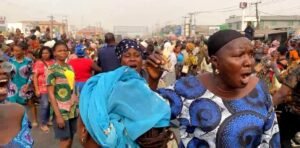
The removal of petrol subsidies and changes to the foreign exchange system initially triggered considerable economic pressure. Fuel prices rose sharply, the naira weakened and inflation increased, placing additional strain on households and businesses.
Government officials, however, have consistently argued that the reforms were necessary to address longstanding structural weaknesses in the economy and create the conditions for sustainable growth.
Recent economic figures provide some support for that position.
Nigeria’s real Gross Domestic Product expanded by 4.43 per cent year-on-year in the second quarter of 2026, compared with 4.23 per cent during the same period in 2025. Growth also improved from 3.89 per cent recorded in the first quarter of 2026.
Agriculture grew by 4.39 per cent, while the services sector recorded 4.60 per cent growth.
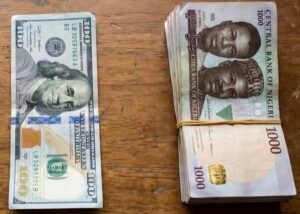
Foreign investment has also increased significantly. Capital importation rose from $5.64 billion in the first quarter of 2025 to $10.37 billion in the corresponding quarter of 2026.
However, the composition of those inflows remains important.
Most of the investment came through portfolio investments, which accounted for $9.86 billion, or more than 95 per cent of total inflows. Foreign direct investment was only $135.08 million.
This suggests that while investors are showing greater interest in Nigerian financial assets, the country is yet to attract the same level of long-term productive investment into factories, manufacturing and other businesses capable of creating large numbers of jobs.
Budget Implementation Remains a Challenge
Despite the government’s ambitious spending plans, the implementation of approved budgets continues to present a major challenge.
The 2026 federal budget was signed at N68.32 trillion, with N32.2 trillion allocated to capital expenditure. Debt servicing was allocated N15.8 trillion, while recurrent spending received N15.4 trillion.
The large capital allocation reflects the government’s intention to tackle Nigeria’s infrastructure deficit. The bigger question, however, is whether the funds will actually be released and projects completed as planned.
Previous budget performance has raised concerns.
By the third quarter of 2025, the Federal Government had realised N18.6 trillion in revenue, representing about 61 per cent of its target. Capital expenditure performance was particularly weak, with only N3.10 trillion, or 17.7 per cent of the 2025 capital budget, released during that period.
The government explained that part of the challenge was the decision to continue funding projects contained in the previous year’s budget.
The overlap between different budget cycles has also complicated implementation. The 2024 capital budget extended well into 2025, while the 2025 capital budget was later extended to June 2026.
These developments have raised broader questions about fiscal planning, transparency and the government’s ability to deliver projects within the periods covered by annual appropriations.
Moving Economic Planning to the Grassroots
One of the administration’s major planning initiatives is the Renewed Hope Ward Development Programme.
The programme is designed to take economic development closer to communities by focusing on Nigeria’s 8,809 wards.
Rather than relying exclusively on broad national programmes, the initiative seeks to identify economic opportunities at the local level and support activities such as agriculture, trade, food processing and mining.
The government says the programme could help bring at least 10 million Nigerians into productive economic activity, with a target of about 1,000 people in each ward.
The approach is significant because national economic statistics can sometimes mask the difficulties experienced by households and small businesses at the community level.
The World Bank has expressed interest in supporting the initiative, pointing to existing programmes that could provide useful models for grassroots development.
New Development Plans and Better Economic Data
The Ministry of Budget and Economic Planning has also been working on the National Development Plan for 2026–2030.
The plan is expected to connect the administration’s longer-term Agenda 2050 objectives with its ambition to build a $1 trillion economy by 2030.
Other initiatives include the $500 million World Bank-backed HOPE Governance Programme, which is focused on improving governance and service delivery in areas such as basic education and primary healthcare.
The government is also pursuing agricultural and industrial projects, including cassava-based bio-ethanol initiatives across Nigeria’s six geopolitical zones. The projects are expected to generate thousands of direct and indirect employment opportunities if successfully implemented.
Another important development has been the revision of Nigeria’s economic statistics.
The National Bureau of Statistics rebased the country’s Gross Domestic Product and updated the Consumer Price Index framework. The GDP rebasing incorporated economic activities that had previously received less attention, including digital services, fintech, creative industries, tourism, maritime transport and informal trade.
Following the exercise, Nigeria’s nominal GDP for 2024 was recalculated at N372.82 trillion.
Better data should give policymakers, businesses and investors a clearer picture of the size and structure of the Nigerian economy.
The Real Test Is Implementation
Nigeria’s economic reform story is therefore mixed.
On one side, economic growth has strengthened, capital inflows have increased and the government has introduced several reforms aimed at improving fiscal management, economic planning and investment.
On the other, Nigerians continue to face significant economic pressures, while concerns remain about poverty, food insecurity, infrastructure gaps and the government’s limited fiscal space.
The biggest challenge may ultimately be implementation.
Ambitious budgets, development plans and economic programmes will have limited impact if they do not translate into completed infrastructure, stronger businesses, more jobs and improved public services.
As Nigeria moves deeper into its reform programme, the effectiveness of the government may increasingly be judged not by the size of its budgets or the number of policies announced, but by what is actually delivered to citizens.
For Bagudu and the wider economic management team, the next phase will therefore be about turning improving macroeconomic indicators and ambitious policy plans into measurable improvements in the everyday lives of Nigerians.
About The Author