
Market Women, Students Protest Nigeria’s Rising Debt at Finance Ministry
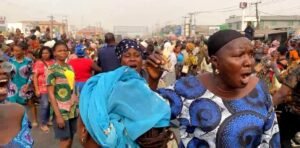
Market women, university students and civil society groups have staged a protest at Nigeria’s Federal Ministry of Finance over the country’s growing debt burden and continued government borrowing.
The demonstrators arrived at the ministry’s premises in the morning, calling on the Federal Government to reconsider further borrowing and adopt alternative measures to finance its activities.
They also appealed to international lenders, including the World Bank and International Monetary Fund (IMF), to stop extending additional loans to Nigeria.
Protesters Raise Concern Over Debt Burden
The protesters argued that continued borrowing could place greater financial pressure on ordinary Nigerians, particularly at a time when households are already dealing with economic difficulties.
Chanting messages calling for relief from additional borrowing, the group urged international financial institutions to “let Nigeria breathe.”
One protester also questioned how Nigeria could effectively address issues such as climate change while continuing to accumulate more debt.
The protesters called on the government to focus on measures that could strengthen the economy and reduce the need for additional borrowing.
Nigeria’s Public Debt Reaches ₦159.35 Trillion
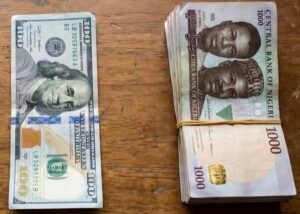
The demonstration comes against the backdrop of official figures showing that Nigeria’s public debt stock remains above ₦159 trillion.
According to the Debt Management Office (DMO), Nigeria’s total public debt stood at ₦159.35 trillion as of March 31, 2026, compared with ₦159.28 trillion recorded at the end of December 2025.
The figures represent an increase of approximately ₦71.6 billion during the first quarter of 2026.
The report also highlighted the country’s substantial foreign borrowing, with external debt reported at more than $51.9 billion during the period.
Calls for Alternative Financing
Beyond opposing additional loans, the protesters urged the Federal Government to explore other ways of generating revenue and funding development.
They called for greater attention to policies that could ease economic pressure on citizens while reducing dependence on borrowing.
The demonstration reflects continuing concerns among civil society groups and other Nigerians about the country’s debt trajectory and the long-term implications of servicing accumulated obligations.
As discussions around Nigeria’s fiscal position continue, the protesters’ demands have added another layer to the debate over how the government should balance infrastructure and development spending with debt sustainability.
About The Author