
Nigeria’s Agriculture Sector Records $266.8 Million in Foreign Capital Inflows
Nigeria’s agricultural sector attracted approximately $266.82 million in capital importation between 2023 and 2025, highlighting growing investor interest in one of the country’s most important economic sectors.
The investment inflows recorded over the three-year period indicate increased attention from foreign investors and other sources of international capital, even as businesses operating in the agricultural value chain continue to contend with production, infrastructure and financing challenges.
According to data reported by The Nation, capital inflows into the agricultural sector increased over the period under review, suggesting that investment interest in agriculture has strengthened compared with earlier years.
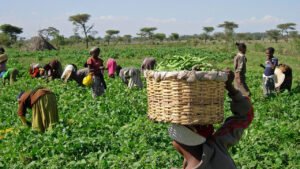
Agriculture remains a major component of Nigeria’s economy, providing livelihoods for millions of Nigerians and supporting activities across crop production, livestock, fisheries, agro-processing, storage, transportation and distribution.
The latest investment figures are significant because the sector requires substantial capital to expand production and improve the infrastructure needed to move agricultural commodities from farms to consumers and industrial users.
Investment in agriculture can also support the development of agro-processing industries, allowing more agricultural commodities to be processed locally rather than exported or sold in raw form. This could create additional opportunities for businesses involved in food manufacturing, packaging, logistics and other parts of the agricultural value chain.
The increase in capital inflows comes at a time when Nigeria is seeking to diversify its economy and reduce excessive dependence on the oil sector. Agriculture has consistently been identified as one of the areas with the potential to contribute to economic diversification, employment creation and increased domestic production.
However, attracting more investment into the sector will depend on the ability to address some of the structural challenges confronting agricultural businesses. These include inadequate rural infrastructure, limited access to affordable financing, storage constraints, insecurity in some farming communities, transportation costs and exposure to climate-related risks.
Greater investment could help address some of these challenges by providing funding for modern farming equipment, irrigation systems, processing facilities, storage infrastructure and improved supply chains.
The growth in capital importation also points to the potential opportunities available across Nigeria’s agricultural value chain. Rather than focusing solely on primary farming, investors can participate in areas such as fertiliser production, mechanisation, agricultural technology, food processing, cold-chain logistics, warehousing and commodity trading.
With Nigeria’s large population creating substantial demand for food and agricultural products, sustained investment could play a role in improving domestic production and strengthening the broader food supply chain.
The $266.82 million recorded between 2023 and 2025 therefore represents more than an investment figure; it reflects continued interest in the commercial potential of Nigeria’s agricultural economy.
Going forward, maintaining investor confidence and converting investment commitments into productive projects will be important for ensuring that increased capital flows translate into higher agricultural output, job creation and stronger value addition within the Nigerian economy.
About The Author