
Manufacturers Demand ₦1tn Intervention as Nigeria’s Factory Crisis Deepens
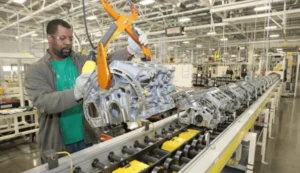
Nigeria’s manufacturing sector is calling for the implementation of a ₦1 trillion Manufacturing Stabilisation Fund, warning that difficult operating conditions are putting increasing pressure on factories and threatening industrial activity across the country.
The Manufacturers Association of Nigeria (MAN) has been pushing for the fund as part of measures to address the sector’s worsening access to affordable credit, high energy expenses, currency-related pressures and other production challenges.
The proposed intervention was included in the Federal Government’s Accelerated Stabilisation and Advancement Plan, but manufacturers say its implementation has remained outstanding.
Manufacturers face mounting financial pressure
The call comes as manufacturers contend with rising production costs and weaker access to bank financing.
Data from the Central Bank of Nigeria showed that commercial bank lending to the manufacturing sector fell from ₦8.53 trillion in December 2024 to ₦6.61 trillion in December 2025.
That represents a decline of approximately ₦1.92 trillion, or 22.5 per cent, during the period.
MAN has linked the reduction to high interest rates, cautious lending by commercial banks and the broader challenges facing manufacturers.
Fund expected to ease credit constraints
Manufacturers argue that the proposed ₦1 trillion facility could provide businesses with access to more affordable funding and help companies cope with the financial effects of currency depreciation and high energy costs.
The association has maintained that manufacturers need longer-term and less expensive financing to keep factories operating, protect existing jobs and support investment in new production capacity.
MAN has also expressed concern over the delay in putting the stabilisation fund into operation, describing its continued non-implementation as a major setback for the sector.
Energy costs remain a major burden
Electricity and alternative power generation continue to represent a significant expense for Nigerian manufacturers.
Many factories rely on diesel, gas and other self-generation options because of unreliable public electricity supply.
Recent reporting citing MAN data indicated that manufacturers spent about ₦1.34 trillion on alternative electricity in 2025, up from approximately ₦1.11 trillion the previous year.
The money spent on alternative power represents a cost that businesses could otherwise deploy toward machinery, expansion, research, employee training and other productive investments.
Unsold goods add to manufacturers’ worries
The difficult operating environment is also occurring alongside growing inventories among companies listed on the Nigerian Exchange.
Recent analysis showed that manufacturers and other industrial companies listed on the NGX entered the second quarter of 2026 with combined inventories of approximately ₦1.77 trillion, representing a 10.6 per cent year-on-year increase.
At the same time, their combined cost of sales rose to about ₦1.43 trillion.
The buildup in unsold products suggests that some businesses are facing challenges translating production into sales while consumers contend with high prices and reduced purchasing power.
Industry seeks urgent government intervention
Manufacturers say addressing the situation requires coordinated action on financing, electricity, infrastructure, foreign exchange and the overall business environment.
The proposed stabilisation fund is therefore being presented as one component of a wider intervention package rather than a standalone solution.
Industry stakeholders argue that keeping factories open has implications beyond individual businesses because manufacturing supports employment, local supply chains, tax revenues and domestic production.
Protecting Nigeria’s industrial base
The continued pressure on manufacturers has raised concerns about the ability of businesses to maintain production and make fresh investments.
For manufacturers, access to affordable finance could provide some relief while helping companies maintain operations during a period of elevated costs.
The industry is now urging the Federal Government to move beyond policy commitments and implement practical measures capable of easing the financial and operational pressures facing factories.
With manufacturers already dealing with expensive energy, weaker credit flows and growing inventories, the proposed ₦1 trillion stabilisation fund has become a major part of the industry’s call for measures to protect Nigeria’s productive capacity.
About The Author