
Tinubu Promises Cheaper Living, More Jobs as Nigeria Enters New Economic Phase
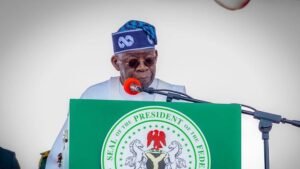 President Bola Ahmed Tinubu has said Nigeria is moving into a new phase of economic development, with his administration shifting its focus from difficult reforms to improving living standards, creating jobs and expanding opportunities for citizens.
Tinubu made the declaration in his 66th Independence Day address to Nigerians on Thursday, October 1, saying the government’s next priority is to ensure that economic improvements translate into tangible benefits for households and businesses.
The President acknowledged that millions of Nigerians continue to face difficulties paying for food, education, healthcare and transportation. However, he argued that the country had now reached a point where the emphasis should move from economic stabilisation to broad-based prosperity.
Focus Shifts to Lower Cost of Living
According to Tinubu, reducing the cost of living will require lowering the expenses associated with producing and transporting goods.
He said the Federal Government is focusing on agricultural mechanisation, irrigation, access to seeds and fertiliser, storage facilities and transportation infrastructure as part of efforts to increase domestic production and reduce losses between farms and markets.
The President also highlighted investments in roads, railways and ports, saying more efficient movement of goods should eventually help bring down prices for consumers.
He explained that cheaper production, improved logistics and lower business operating costs could create savings that would ultimately benefit Nigerians at the point of purchase.
Jobs and Industrial Growth Take Centre Stage
Tinubu said employment and enterprise would be central to the government’s next phase, particularly as millions of young Nigerians enter the workforce each year.
He outlined plans to use the country’s gas resources to support industrial development, help businesses revive factories, expand digital connectivity and provide skills training aligned with the needs of employers.
The President also expressed his desire to see more Nigerian-made products supplied to local consumers and exported to international markets.
He said expanding domestic production would not only create employment but also strengthen businesses and provide more opportunities for young Nigerians.
President Acknowledges Continuing Hardship
Despite his optimistic outlook, Tinubu admitted that many families are still struggling with basic expenses.
He said the difficulties faced by vulnerable Nigerians were linked not only to recent reforms but also to problems that had accumulated over several decades, including weak infrastructure, low productivity and limited economic opportunities.
Tinubu said the government could not reverse all of those challenges within four years but could alter the country’s direction and establish conditions for gradual improvement.
He pointed to initiatives such as the National Social Register, Nigerian Education Loan Fund and CREDICORP as measures intended to provide support while citizens move towards greater economic independence.
Tinubu Says Poverty Must Be Defeated
The President said government assistance should serve as a bridge rather than become a permanent substitute for economic opportunity.
He pledged that his administration’s broader objective is to reduce poverty by expanding productive employment and sustaining economic growth.
Tinubu acknowledged that achieving the goal would require time, discipline and the creation of millions of productive opportunities across the country.
Government Points to Economic Indicators
In his address, Tinubu also cited several economic indicators that he said demonstrate progress since the beginning of his administration’s reforms.
He pointed to economic growth of more than four per cent in 2026, lower inflation from its previous peak, rebuilt foreign reserves, greater stability in the foreign exchange market and a reduction in oil theft.
The President also said Nigeria recorded more than $6 billion in non-oil export revenue in 2025. These figures were presented by the President as evidence that the economy is entering the next stage from a stronger foundation.
From Reform to Prosperity
Tinubu described the current period as a turning point for Nigeria, saying the government’s economic priorities have shifted after years of implementing difficult reforms.
He said the next phase would be judged not simply by macroeconomic statistics but by whether Nigerians experience improvements in food affordability, transportation, employment, education and household incomes.
The President urged Nigerians to remain focused on the future, expressing confidence that sustained economic growth and increased domestic production can help deliver the prosperity he outlined in his Independence Day message.
He said the ultimate objective is a Nigeria where opportunity is more widely available and economic progress is reflected in the daily lives of citizens.
About The Author