
UBA Chief Says Improving Economic Indicators Signal Nigeria’s Economic Stabilisation

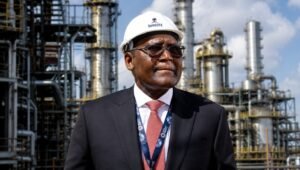
Recent improvements in some of Nigeria’s key economic indicators could be pointing to a period of greater macroeconomic stability, according to Oliver Alawuba, Group Managing Director of United Bank for Africa (UBA)and Chairman of the Body of Bank CEOs in Nigeria.
Alawuba, however, said the progress must go beyond improvements in economic statistics and ultimately translate into stronger opportunities, better living conditions and broader prosperity for Nigerians.
He made the remarks while delivering a goodwill address at the 19th Annual Banking and Finance Conference of the Chartered Institute of Bankers of Nigeria (CIBN) in Abuja. The conference focused on building a resilient economy in the face of growing global disruptions.
Alawuba calls for deliberate economic resilience
Speaking on the conference theme, “Building a Resilient Economy in an Era of Disruptions: Imperatives for the Banking and Financial Services Industry,” the UBA chief argued that economic resilience should not be left to chance.
He said resilience needs to be deliberately incorporated into Nigeria’s policies, institutions and economic infrastructure.
According to him, this should extend across critical areas including infrastructure, supply chains, energy systems, financial institutions and human capital.
Alawuba explained that a resilient economy should not be defined as one that never experiences shocks. Instead, he said the strength of an economy should be measured by its ability to absorb disruptions, adjust to changing conditions and continue moving forward without placing the full burden of those shocks on the most vulnerable members of society.
Global disruptions create fresh challenges
The UBA executive also drew attention to the changing global economic environment.
He noted that economies around the world continue to face a range of structural challenges, including geopolitical tensions, fluctuations in energy prices, instability in global shipping and persistent inflationary pressures.
For Nigeria, these developments underline the importance of preparing for external shocks before they occur rather than waiting until they have already caused significant economic damage.
Alawuba’s position is that Nigeria needs systems capable of responding quickly to disruptions while protecting economic activity and vulnerable households.
Praise for fiscal and monetary coordination
Alawuba also commended the Federal Government and the Central Bank of Nigeria (CBN) for what he described as increasingly effective coordination between fiscal and monetary authorities.
He said recent improvements in major economic indicators represent important milestones in Nigeria’s stabilisation process.
His comments come as policymakers continue to focus on restoring macroeconomic stability following years of significant inflationary and foreign-exchange pressures.
The UBA chief’s assessment, however, was framed around the need to ensure that improving macroeconomic conditions eventually produce wider benefits across the economy rather than remaining limited to headline statistics.
Stability must translate into better living conditions
While acknowledging the progress recorded in economic indicators, Alawuba stressed that stabilisation should ultimately be measured by its impact on Nigerians.
He called for economic gains to be converted into wider opportunities for individuals and businesses.
This includes creating an environment where businesses can invest, expand operations and create jobs, while households benefit from improved economic opportunities.
The emphasis reflects a broader distinction between macroeconomic stability and living standards: falling inflation or improved financial indicators can signal greater stability, but they do not automatically mean that households immediately experience lower living costs or higher purchasing power.
Alawuba therefore argued that the next stage of Nigeria’s economic journey should focus on ensuring that stabilisation becomes more inclusive.
Banks positioned as shock absorbers
The banking industry, according to Alawuba, has an important role to play in building a more resilient economy.
He described banks as both financial shock absorbers and partners in economic growth, highlighting their role in providing credit, facilitating investment and supporting businesses through periods of economic uncertainty.
A strong banking sector can help channel savings into productive activities, provide financing for businesses and households, and support economic activity when external conditions become difficult.
For this reason, he said resilience within the financial system should be treated as an essential component of Nigeria’s wider economic strategy.
Infrastructure and energy remain critical
Alawuba’s call for a resilient economy also covers infrastructure and energy systems.
Businesses depend on reliable infrastructure and energy to keep production costs under control and remain competitive.
Weak infrastructure can increase operating expenses, reduce productivity and make businesses more vulnerable to external shocks.
Building resilience therefore requires investment not only in financial institutions but also in the physical systems that support production, transportation, communication and energy supply.
Human capital is part of economic resilience
The UBA chief also included human capital among the areas that need greater attention.
A resilient economy requires a workforce capable of adapting to changing technologies, industries and global economic conditions.
Investment in skills and human capital can therefore help Nigeria improve productivity while preparing workers and businesses for structural changes in the global economy.
This becomes particularly important as technology continues to reshape financial services, manufacturing, trade and other sectors.
Public-private cooperation needed
Another major theme of Alawuba’s address was the need for stronger collaboration between government and the private sector.
He argued that building a resilient economy cannot be achieved by government alone.
Financial institutions, businesses, investors and other private-sector participants also have a role in strengthening Nigeria’s economic foundations.
Greater collaboration could help improve infrastructure, expand access to finance, support investment and develop systems capable of responding more effectively to future economic shocks.
Looking beyond short-term recovery
Alawuba’s message ultimately focused on the need for Nigeria to look beyond short-term economic recovery and build institutions capable of sustaining stability over the long term.
The recent improvement in economic indicators, in his assessment, provides an opportunity to strengthen the foundations of the economy.
But maintaining that progress would require deliberate policies, stronger institutions, resilient infrastructure, reliable energy systems and a financial sector capable of supporting productive economic activity.
For Nigerians, the more important test will be whether these improvements eventually translate into more jobs, stronger businesses, greater investment opportunities and better living standards.
The banking sector, Alawuba maintained, has a central role to play in helping convert macroeconomic stability into broader and more inclusive economic growth.
About The Author