
Nigeria’s Return to Frontier Market Status Lifts Stocks, Adds ₦1.29trn in Market Value
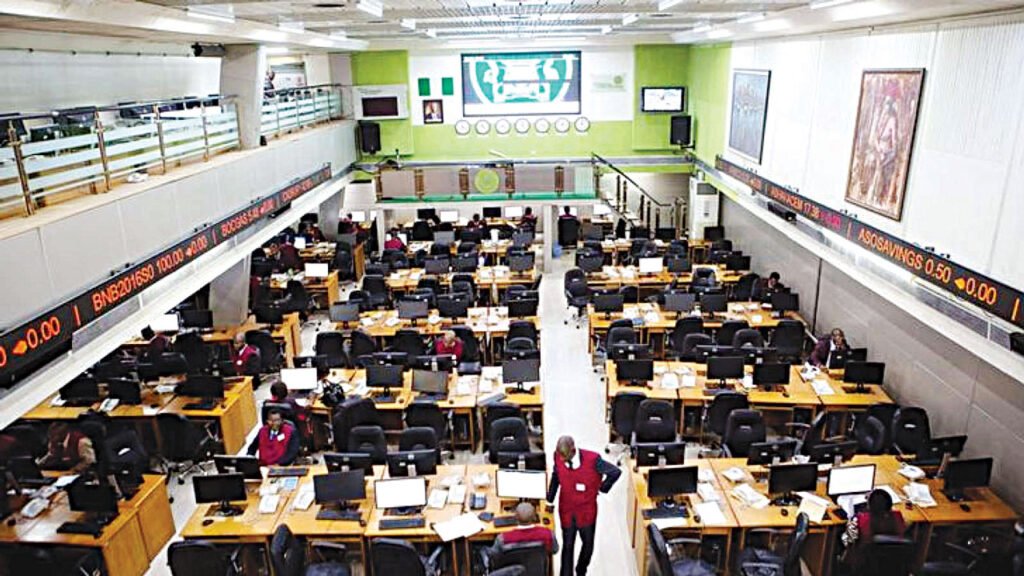
Nigeria’s stock market has resumed its upward trajectory after FTSE Russell confirmed the country’s return to Frontier Market status, boosting investor sentiment and adding ₦1.29 trillion to the value of listed equities.
The development comes after Nigeria spent about three years outside the global index provider’s classified market categories. FTSE Russell’s decision to move Nigeria from “Unclassified” to Frontier Market status is being viewed as a major vote of confidence in the country’s economic and capital market reforms.
The reclassification is scheduled to take effect at the opening of trading on September 21, 2026.
The announcement has already triggered renewed buying interest on the Nigerian Exchange (NGX), coming shortly after the market experienced a prolonged period of profit-taking and correction.
The NGX All-Share Index (NGX-ASI) initially opened lower on Friday, August 28, but subsequently recovered as buying pressure strengthened. By 1:18 p.m., the index had gained 0.41 percent, rising from 239,302.36 points at noon to 240,136.10 points.
The index eventually closed the week at 241,298.47 points.
The renewed buying also pushed total market capitalisation higher. The value of listed equities increased from ₦154.536 trillion on Thursday to ₦155.825 trillion at the close of the week, representing a ₦1.29 trillion increase.
Foreign investors expected to return
Nigeria’s return to the Frontier Market classification could have a broader impact than the immediate stock market rally.
The country was removed from FTSE Russell’s classification in September 2023 following difficulties around foreign exchange availability and the repatriation of investment proceeds. Those challenges made it difficult for international investors to access and exit the Nigerian market efficiently.
With foreign exchange conditions improving and previous backlogs cleared, investors and index-tracking funds are now expected to reassess Nigerian equities.
The reclassification could therefore increase Nigeria’s exposure to foreign portfolio investors and potentially improve liquidity on the local exchange.
However, analysts and market authorities face the challenge of ensuring that the current rally develops into sustained investment rather than a short-term speculative surge.
NGX sees opportunity to deepen market
Temi Popoola, Group Managing Director and Chief Executive Officer of NGX Group, said the reclassification provides an opportunity to attract a wider pool of investors and strengthen capital flows into the Nigerian market.
According to him, the focus should now shift towards converting the renewed investor interest into sustained market development, stronger liquidity and greater capital formation.
The Federal Ministry of Finance also welcomed FTSE Russell’s decision, crediting collaboration among the Securities and Exchange Commission (SEC), Central Bank of Nigeria (CBN), NGX Group, Central Securities Clearing System (CSCS) and other capital market participants for the progress.
Finance Minister and Coordinating Minister of the Economy, Taiwo Oyedele, described the reclassification as an endorsement of Nigeria’s reform programme and a signal to international investors that the country’s market is becoming more accessible and orderly.
Emerging Market status remains the bigger goal
The government said the return to Frontier Market status should be viewed as a milestone rather than the final destination.
Oyedele said Nigeria’s longer-term objective is to develop a deeper, more liquid and globally competitive capital market capable of eventually attaining Emerging Market status.
Achieving that goal will depend on maintaining macroeconomic stability, predictable regulation, consistent economic policies and continued improvements in market infrastructure.
For investors, however, Nigeria’s return to the FTSE Russell Frontier Market universe represents an immediate opportunity to reassess one of Africa’s largest equity markets.
With foreign investors expected to increase their participation and local liquidity showing signs of improvement, the coming weeks could prove critical in determining whether the latest stock market rally develops into a sustained recovery.
About The Author